When to see the light beams
The light beams are the picture most people carry in their heads, and they belong to Upper Antelope Canyon. They need the sun almost straight overhead and a clear sky above the opening. The month of your visit decides whether that can happen, and the hour of your slot decides whether it does. This guide covers both, plus the clock trap that catches midday bookers.
What a light beam is
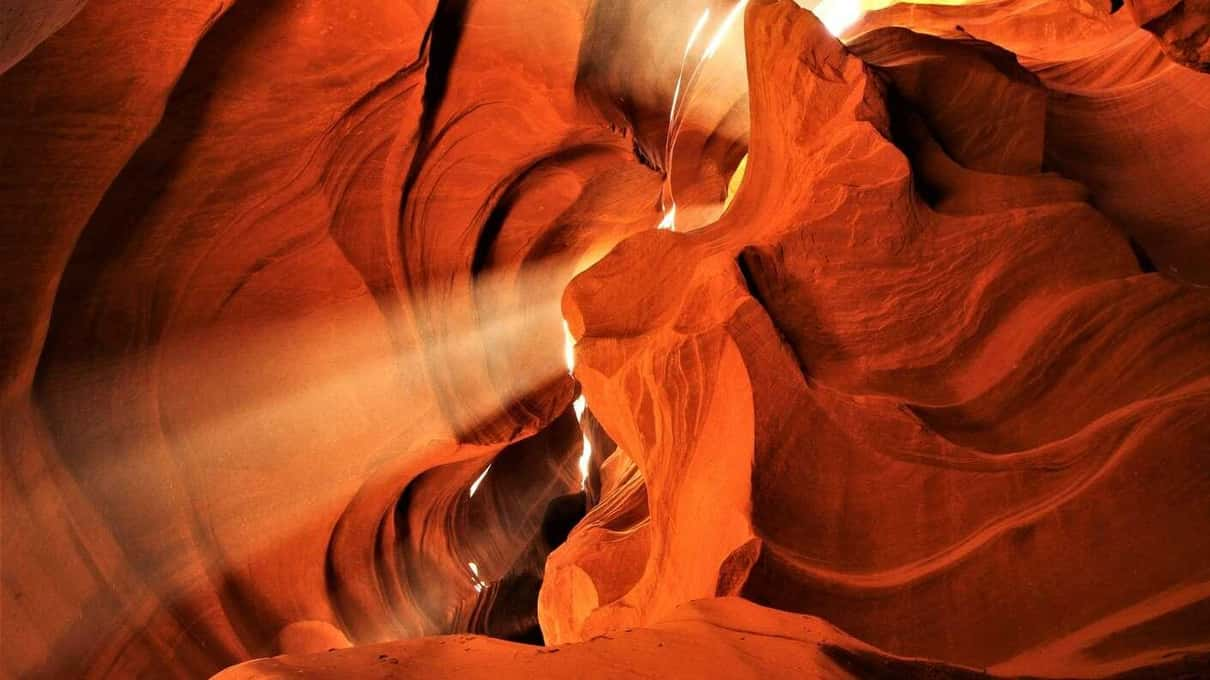
Upper Antelope is wide at the floor and pinched at the top, so the sky shows only as a thin, winding seam. When the sun stands high enough to shine straight down that seam, a shaft of light drops to the sand while the walls around it stay dark. On its own the shaft is faint. Guides toss handfuls of sand into it, and the falling dust is what makes the beam glow in photos.
Lower Antelope and Antelope Canyon X open wider at the top, so their light spreads across the walls as a warm glow instead of falling in one column. Taadidiin's listing does mention light pillars at Canyon X, but the classic beam reaching the floor is an Upper sight. Our comparison of Upper and Lower weighs it against what Lower does better.
The months of the beams
Beams start appearing in late March or April and fade out in early October. They are strongest from about May to August, when the midday sun climbs highest over northern Arizona. One Upper listing gives its beam season as April to September, and reviewers who booked a noon slot in October came away without one.
In winter the sun stays too low to reach the floor. The canyon still repays the trip then, with fewer people around, but its colors turn softer and more muted. Go in expecting glow rather than beams. The best time of year to visit sets the beams against heat and storm risk month by month.
The hours that count
Inside the season, the beams appear from roughly 11 am to 1:30 pm Arizona time. A slot that starts in that window gives the best odds, since you reach the main chambers while the sun is still high. Early morning walks show cool, even light with no shafts at all. Afternoon slots lose the beams fast. One reviewer found a 3:25 pm slot poorly lit, and another warns that tours after 1 pm outside high summer miss the light.
Beams also travel. As the sun crosses the sky they slide along the floor and fade in one chamber while another lights up, and guides time the walk around them.
Prime-time slots sell first
Outfitters know which hours people want, and midday Upper slots cost more and sell out first. In summer they can go a few weeks ahead, so book the beam hour before you settle the rest of the trip. Several listings sell the hour as its own grade. On Viator the Tse Bighanilini "from" price buys a regular slot, while its higher grades (prime, peak, exclusive) cost more, and one reviewer paid about $174.
Tse Bighanilini's prime-time entry, from ~$95, is built around that window, with a shuttle from the office on AZ-98 to the canyon. The catch is the fine print. On GetYourGuide it has gathered only a handful of reviews lately and wants four days' notice for a refund; on Viator there is no refund at all, and a few guests there were asked for more money at check-in.
AACT's Upper tour runs several start times through the day. Pick a late-morning or midday slot on the date picker if one is still open, and check what the tours cost to see how the midday premium compares.
A late-morning slot in Upper
AACT's own Upper tour sells on both sites with free cancellation until 24 hours before, so you can grab a midday slot early and still change your mind. From ~$92 on GetYourGuide, or about $119 on Viator with every fee included.
Clouds and monsoon storms
A beam needs direct sun on the opening, and a single cloud passing overhead switches it off. Hazy days give weak shafts. From about July to mid September the North American monsoon brings afternoon storms, and rain far upstream can send a flash flood through the slot while Page stays dry. Outfitters then close the canyon and offer a new date or a refund. Sometimes the call comes on the day itself. May and June bring strong beams before the storm season starts, though no week is safe from a passing cloud.
The clock trap at noon
Arizona keeps Mountain Standard Time all year, while the Navajo Nation around the canyon moves its clocks for daylight saving. From about March to November a phone near the canyon can jump to Navajo time and show an hour later than the outfitter's clock. The listings run on Arizona time, so a noon slot can look like 1 pm on your screen. Tse Bighanilini closes check-in 45 minutes before departure, and several listings refuse late guests with no refund. Set your phone's time by hand and read the check-in time on your voucher. The time-zone guide covers the rest, and Wikipedia explains time in Arizona itself.
Heat on the way out
The beam hour is also the hottest hour. Page reaches about 95–100 °F (35–38 °C) in summer, and Upper's exit takes you out of the shade for about 15 minutes (21 steps up, 112 down by AACT's count). Bags are banned, so drink well at the check-in. Wear a hat with closed shoes, since several listings refuse open toes. Some outfitters refuse even a water pouch. Children feel the heat first, and the guide to kids and access has more on the climb.
If your dates miss the season
A winter or late-autumn trip still gives you the canyon, only in a different mood. Lower glows from morning to afternoon whatever the month, and the softer light suits wide shots of the curving walls. Canyon X sees fewer people at any time of year, as the guide to the quieter slots explains. Before you go, our photography guide covers the phone settings that make the most of glow or beam.